Disclaimer
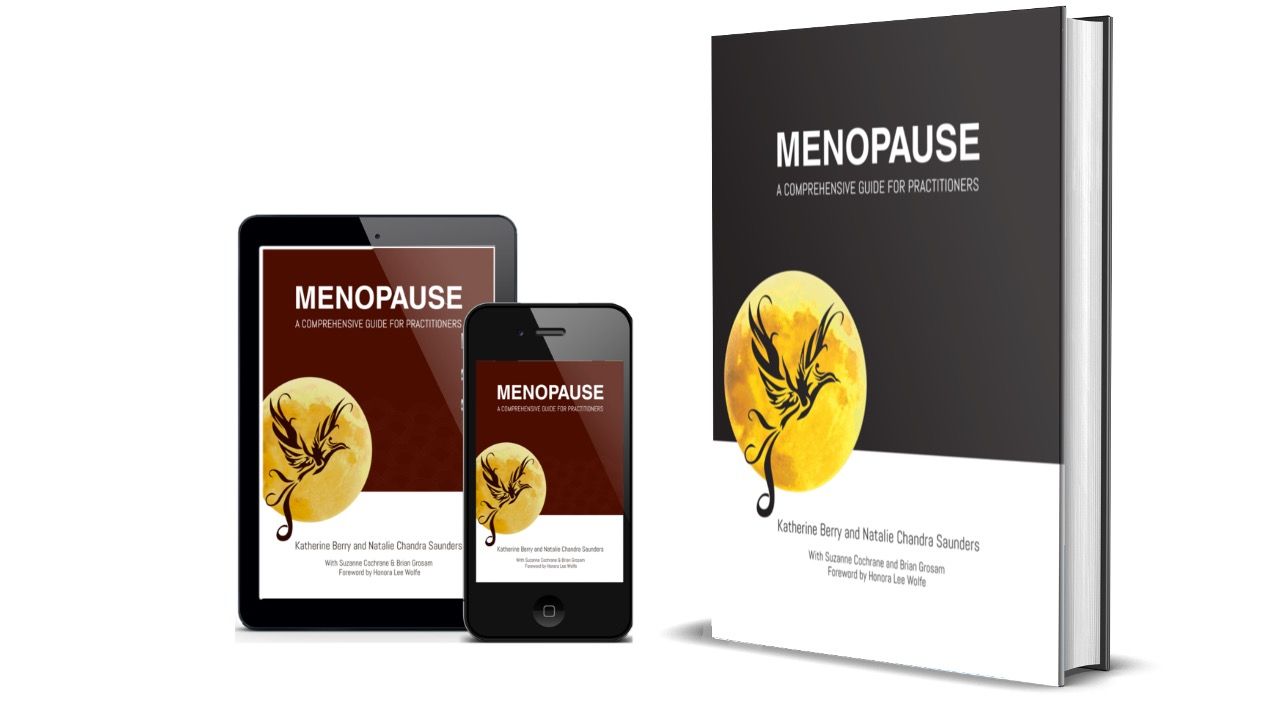
This is an excerpt from the world's first evidence-based acupuncture and herbal medicine menopause textbook: Menopause A Comprehensive Guide for Practitioners. Written by Katherine (Kath) Berry & Natalie Chandra Saunders, registered Chinese medicine practitioners with decades of experience, it is for educational purposes and does not replace personalized medical advice. If you are on medication, have a current diagnosis, or have concerns about your health, please consult your GP or specialist before starting any new treatment. Contact a qualified Acupuncturist / Herbalist for a full consultation and tailored treatment plan.
eBook (US spelling)
ISBN 978-1-7391-308-8-6
Copyright © Katherine Berry 2023
Foreword by Honora Lee Wolfe
In the mid 1990s, I wrote a small book called Managing Menopause Naturally with Chinese Medicine. Though intended for laywomen and not as a clinical text, women practitioners of acupuncture and Chinese herbal medicine embraced it as a reference for helping menopausal patients navigate that life passage with more ease and comfort.
Since then, several other books on this subject, mostly clinical manuals, have been added to the English-language Chinese medical lexicon to help practitioners support patients effectively with acupuncture, herbal medicine, and other East Asian medical tools. So why is this new addition to the literature, Menopause: A Comprehensive Guide for Practitioners, useful and needed? Two things about this book have struck me as especially useful relative to other available literature on this subject.
First, the authors have woven together a clinical narrative that honors both Chinese, Western, and other natural or home care approaches without fear or favor. Though the text is largely about East Asian medicine, the authors clearly understand the importance of using whatever will work to help women maintain health. They have understood that women struggling with symptoms during menopause often do better when Western, naturopathic, East Asian, and possibly Ayurvedic, homeopathic, and psychologic approaches are skillfully combined to support them! No one approach has a monopoly on the truth.
Secondly, despite it being a full clinic manual on treating and preventing menopausal symptoms, the authors’ narrative style is not burdened by excessive medical jargon. Its language is simple, straightforward, and uncondescending while at the same time being a thorough presentation of the clinical symptoms, the variety of treatment options, and self care tools for maintaining health through menopause and beyond. I applaud any technical book that is so easy to read and understand!
In a speech given at the Vancouver Peace Summit in 2009, the 14th Dalai Lama, Tenzin Gyatso, stated his emphatic belief that if the world was to be saved, it must be women, especially older women in the developed world, who could and would do it.
What a remarkable statement! What a noble idea, challenge, and responsibility. It is my belief that women can and must rise to this challenge. As practitioners of Chinese medical gynecology, we are in a singular position to respond by supporting, nourishing, and empowering our older women patients to become the “mothers of their communities” and the wise women who carry the mantle of leadership in difficult times.
Books such as Menopause: A Comprehensive Guide for Practitioners offer a source
of information and inspiration to do that work more effectively.
~Honora Lee Wolfe July, 2022
Honora Lee Wolfe was founding director at the Boulder College of Massage Therapy 1976-1980, studied tuina at the Shanghai College of TCM 1984–1986, and received her Dipl.Ac. in 1988. She has taught extensively at acupuncture colleges and conferences throughout North America and Europe and is author/co-author of several books: Prince Wen Hui’s Cook: Chinese Dietary Therapy, How to Have a Healthy Pregnancy/Healthy Birth with CM, Managing Menopause Naturally, Better Breast Health Naturally, Points for Profit: Essential Guide to Practice Success for Acupuncturists, The Successful Chinese, and most recently Western Physical Exam Skills for Practitioners of Asian Medicine.